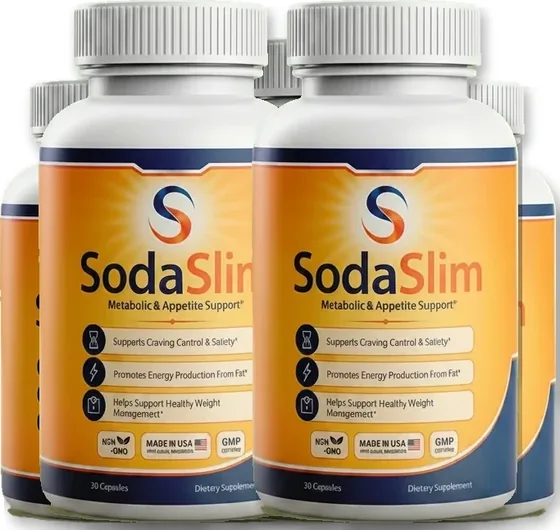
SodaSlim Official Website › Choosing A Formula
Choosing A FormulaChoosing A Metabolism Supplement: Eleven Checks Before You Buy
Eleven checks, in the order worth running them. Start with the stimulant and its amount, because that is the number that governs how a day feels; end with the guarantee, because on a shelf where almost nothing is tested as sold, the ability to change your mind is the concrete thing you are buying.
A method for reading any label in this category, with what a good answer looks like at each step.
The eleven checks, in order
| # | Check | A good answer | A poor answer |
|---|---|---|---|
| 1 | Is there a stimulant, and what is its amount? | A milligram figure for caffeine, printed on the panel | The word caffeine with no figure, or a blend total |
| 2 | Is there a Supplement Facts panel at all? | A panel with a serving size and a row per ingredient | A front panel with claims and no disclosure |
| 3 | Is each botanical standardised? | 45% chlorogenic acid, 50% HCA, 50% EGCG and so on | An extract weight with no marker, or no weight either |
| 4 | Is the plant part named? | Rind, unroasted bean, leaf | A genus alone, which can mean several different preparations |
| 5 | Is there a proprietary blend? | No blend, or a blend with every row broken out | A single total covering eight ingredients |
| 6 | How does each amount compare with its trials? | At or near the published dose | A tenth of it, or unknowable |
| 7 | Is any ingredient animal-evidence only? | Named as such, or absent | Presented as though a mouse study were a human finding |
| 8 | Is there a certificate of analysis? | From a named laboratory, matched to the lot | A filing reference described as though it were one |
| 9 | What do the seals actually certify? | GMP and Non-GMO, which are real and specific | A wall of marks, most of them from the marketing sheet |
| 10 | Does the sales page exceed the label? | The two agree | The page promises what the bottle carefully does not |
| 11 | What is the guarantee, and who answers the telephone? | 60 days or more, opened bottles included, with a number | 30 days, unopened only, and a contact form |
Run them in this order. The first two answer most of the question, and the last one is what you fall back on when they do not.
The first check is first for a reason. A stimulant is the ingredient whose amount you can actually feel, and it is the one that has to fit alongside the coffee, the tea and the energy drink already in your day. A product that will not tell you how much is asking you to guess about the only thing you were going to notice.
The last check is last because it is the fallback. Almost nothing on this shelf has been tested as sold, so a generous refund window is the one concrete protection a buyer has, and a telephone number behind it is worth more than a longer window with a form.
Why the amount matters more than the ingredient list
A list of impressive names tells you what a formulator was thinking. An amount tells you what you are taking.
The gap between the two is where most of this category lives, and it is measurable. The green tea chamber trial used 270 mg of EGCG a day with 150 mg of caffeine; a capsule containing 50 mg of a green tea extract standardised to 50 per cent EGCG supplies 25 mg, which is a tenth of the trial. Both labels say green tea extract.
The same arithmetic applies down the shelf. The garcinia trial used 1,500 mg of hydroxycitric acid a day and still found nothing; a capsule with 100 mg of a 50 per cent extract supplies 50 mg. The chlorogenic acid meta-analysis used 500 mg a day of a standardised extract.
So the useful question is never whether an ingredient works. It is whether this bottle contains enough of it to be the thing the study tested, and that question cannot be asked at all without two numbers: the weight and the standardisation.
What a proprietary blend hides, and what it does not
A proprietary blend prints a single total for several ingredients. The usual defence is that a formula is intellectual property worth protecting, and there is something in that; the usual effect is that nobody can tell whether the impressive ingredient is a gram or a pinch.
The practical rule is that the order tells you something and the total tells you little. Ingredients in a blend are listed by descending weight, so the last name in a 700 mg blend of eight ingredients is getting a small share of whatever is left after the first two.
Worth being fair about what a blend does not hide. It does not hide the ingredient list, and it does not hide the total, so a blend is still more disclosure than a front panel that prints names alone with no panel behind it at all. A shopper meeting the second kind of label has less to work with than one meeting a blend.
Either way the fallback is the same: if the amounts cannot be checked, everything depends on the guarantee and on who answers the telephone.
Reading the seals without being impressed by the count
| Mark | What it certifies | What it does not |
|---|---|---|
| GMP certified | That the facility has documented procedures and follows them | Anything about what is in the capsule |
| Made in the USA | Where assembly happened. Often with global ingredients | Where the raw materials came from |
| Non-GMO | A sourcing statement about the ingredients | Potency, purity or identity |
| FDA-registered facility | That a registration was filed, as every food facility must | Approval, inspection or endorsement |
| Natural | Nothing fixed. The word has no legal definition for a supplement | Anything checkable |
| Doctor formulated | Nothing, unless a doctor is named | A claim with no name attached cannot be checked by anyone |
| Third-party tested | Potentially a great deal, if the party is named | Anything at all, if it is not |
The difference that matters is between a statement about a building and a statement about a capsule.
Count the marks on a bottle and then count how many are printed on the label itself rather than on the sales sheet. The difference is usually large and it is usually unremarked.
None of this means the extra marks are false. It means a wall of nine badges reads as nine assurances when it may be three from the manufacturer and six from a designer, and a shopper who knows that reads the wall differently.
The two questions to ask about the guarantee
First: opened bottles or not? A window that requires an unbroken seal is a window on the packaging rather than on the product, and it is useless for anything judged over weeks. Every trial in this category ran eight to twelve weeks; a thirty-day unopened-only policy is not a trial period at all.
Second: who answers, and how? A telephone number staffed by people who can see your order is worth more than a longer window behind a contact form. A refund is a conversation, and the friction in it is where most disputes actually happen.
Two follow-ups are worth asking before you buy rather than afterwards. Who pays return postage, which is almost always the buyer. And how long the money takes: processing after the parcel arrives, then the bank, which are two separate waits and usually add up to weeks rather than days.
On a shelf where almost nothing has been tested as sold, this is the single most concrete thing a buyer is purchasing, and it is worth reading before the ingredient list.
A five-minute version of the whole method
- Find the caffeine figure. No figure, no plan.
- Find the Supplement Facts panel. No panel, and everything below is guesswork.
- Pick the two ingredients the marketing leans on and look up the dose their trials used.
- Count the seals on the bottle against the seals on the sales page.
- Read the guarantee, and check whether opened bottles are included.
That is the entire method compressed, and it will separate most of this shelf into products you can assess and products you cannot.
What it will not do is tell you whether anything works, because on this shelf almost nothing has been tested as sold. The fuller picture of what the ingredients themselves have been shown to do is in the metabolism supplement guide.
Sources behind this checklist
- Dulloo AG, Duret C, Rohrer D, et al. Efficacy of a green tea extract rich in catechin polyphenols and caffeine in increasing 24-h energy expenditure and fat oxidation in humans. Am J Clin Nutr. 1999;70(6):1040-5. PMID 10584049. https://pubmed.ncbi.nlm.nih.gov/10584049/
- Heymsfield SB, Allison DB, Vasselli JR, et al. Garcinia cambogia (hydroxycitric acid) as a potential antiobesity agent: a randomized controlled trial. JAMA. 1998;280(18):1596-600. PMID 9820262. https://pubmed.ncbi.nlm.nih.gov/9820262/
- Kanchanasurakit S, Saokaew S, Phisalprapa P, Duangjai A. Chlorogenic acid in green bean coffee on body weight: a systematic review and meta-analysis of randomized controlled trials. Syst Rev. 2023;12(1):163. PMID 37710316. https://pubmed.ncbi.nlm.nih.gov/37710316/
- Wikoff D, Welsh BT, Henderson R, et al. Systematic review of the potential adverse effects of caffeine consumption in healthy adults, pregnant women, adolescents, and children. Food Chem Toxicol. 2017;109(Pt 1):585-648. PMID 28438661. https://pubmed.ncbi.nlm.nih.gov/28438661/
- Andrews KW, Gusev PA, Savarala S, et al. Dietary Supplement Ingredient Database (DSID) and the application of analytically based estimates of ingredient amount to intake calculations. J Nutr. 2018;148(suppl_2):1413S-1421S. PMID 31505677. https://pubmed.ncbi.nlm.nih.gov/31505677/
- Phan DTA, Nguyen TTT, Le TTH, et al. From 'traditional' remedies to 'modern' supplements: a systematic review and meta-analysis of pharmaceutical adulteration in weight-loss natural products. Front Pharmacol. 2025;16:1594975. PMID 40444036. https://pubmed.ncbi.nlm.nih.gov/40444036/
- White CM. Continued risk of dietary supplements adulterated with approved and unapproved drugs: assessment of the US Food and Drug Administration's tainted supplements database 2007 through 2021. J Clin Pharmacol. 2022;62(8):928-934. PMID 35285963. https://pubmed.ncbi.nlm.nih.gov/35285963/
- Questions and Answers on Dietary Supplements. U.S. Food and Drug Administration. https://www.fda.gov/food/information-consumers-using-dietary-supplements/questions-and-answers-dietary-supplements
- Dietary Supplements for Weight Loss: Fact Sheet for Consumers. Office of Dietary Supplements, National Institutes of Health. https://ods.od.nih.gov/factsheets/WeightLoss-Consumer/
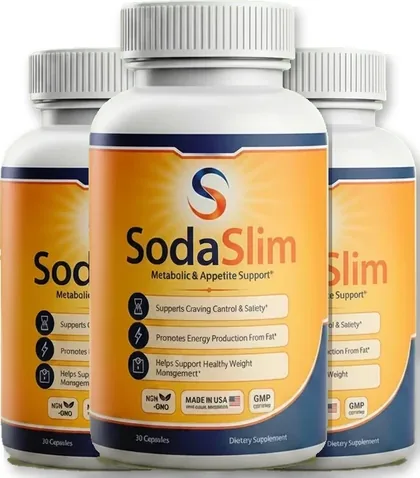
Run these checks on SodaSlim yourself
Five named botanicals, no amounts printed, three marks on the bottle and six on the sheet, and 60 days from the date of purchase with opened bottles included.
Two bottles $158 · six bottles $294 · 60-day money-back guarantee
Choose A SodaSlim PackThirty capsules, thirty mornings · lot SOD-26/SA-1714 · ships from the U.S.