SodaSlim Official Website › Metabolism Supplement Guide
Metabolism Supplement GuideA Metabolism Supplement Guide: What Is On The Shelf And What The Evidence Says
Almost every metabolic-support supplement sold direct is built from the same short list of ingredients: caffeine, a green tea catechin extract, a chlorogenic acid source, a hydroxycitric acid source and one or two compounds with mechanisms described only in animals. This guide sets out what each of those groups has actually been shown to do, at what amount, and over how long.
Written about the category rather than about any one bottle, with every dose taken from the trial's own methods section.
The five ingredient families this shelf is built from
| Family | Typical members | What it is proposed to do | Where the evidence sits |
|---|---|---|---|
| Stimulant thermogenics | Caffeine anhydrous, guarana, green tea with caffeine | Raise resting energy expenditure and blunt appetite for a few hours | The strongest on this shelf. Dose-dependent and repeatedly measured |
| Catechin thermogenics | Green tea extract, EGCG | Raise 24-hour energy expenditure and shift the fuel mix towards fat | Good acute mechanism, small long-term effect |
| Carbohydrate moderators | Green coffee bean extract, chlorogenic acid, white kidney bean | Slow the absorption of sugars from a meal | Small, consistent, and carrying one famous retraction |
| Lipogenesis inhibitors | Garcinia cambogia, hydroxycitric acid | Inhibit the enzyme that assembles fat from citrate, and raise satiety | A textbook mechanism that failed its largest trial |
| Animal-derived mechanisms | Raspberry ketone, synephrine, forskolin | Various; usually lipolysis in a cell or a rodent | No human trial of the compound alone, in most cases |
A map of the category, compiled from the trials cited at the foot of this guide.
Read down that last column and the shape of the shelf is clear. The evidence is strongest for the thing everybody already knows about — caffeine raises energy expenditure — and thins steadily as the ingredient becomes more exotic.
That ordering matters because a label's ingredient list usually runs the other way. The novel-sounding ingredient is what the marketing is built on, and the ingredient with the actual evidence is the one nobody boasts about because it is in coffee.
What the caffeine evidence actually shows
Caffeine is the best-evidenced ingredient on this shelf and it is worth being precise about what that means.
A double-blind crossover study gave healthy volunteers 100 mg, 200 mg and 400 mg of oral caffeine and measured energy expenditure rising with the dose. A dose-response meta-analysis of thirteen randomised trials in 606 people found that each doubling of caffeine intake went with roughly a 22 per cent larger reduction in body weight across those studies. A review of caffeine and appetite finds a real suppression in the hours after a dose that does not reliably carry through a whole day.
Three qualifications belong with those findings. Tolerance matters: a meta-analysis of catechin and caffeine mixtures found smaller effects in habitual caffeine consumers. The absolute size is modest: a four per cent lift in resting expenditure is roughly a biscuit. And the safety ceiling is real — the 2017 systematic safety review works to 400 mg a day for healthy adults, pooled trial data put the average blood pressure effect at around 2 mmHg systolic, and a 2023 meta-analysis found caffeine taken later in the day measurably shortens sleep.
The practical consequence for a shopper is one question: how much caffeine is in it? A product that answers is one you can plan around. A product that does not is a caffeinated drink of unknown strength, and that is a harder thing to fit into a day than most labels admit.
Green tea extract: a clean acute finding and a small long-term one
The 1999 respiratory-chamber trial is the study this ingredient rests on. Ten healthy men were given an extract supplying 50 mg of caffeine and 90 mg of EGCG at each of three meals. Twenty-four-hour energy expenditure rose four per cent and the respiratory quotient fell, which is the signature of a shift towards burning fat. Caffeine alone at the same amount did neither, which is why green tea extract is on this shelf rather than being redundant beside a coffee.
Over months the picture shrinks. The Cochrane review of green tea preparations in overweight and obese adults found weight changes small and not clinically important. A 2009 meta-analysis reached a similar conclusion. A twelve-week trial at 856.8 mg of EGCG a day reported about 1.1 kg, with lower ghrelin and higher adiponectin. A 2024 meta-analysis of catechins alongside exercise training found the addition modest.
There is also a safety literature worth knowing about before buying a concentrated extract. The United States Pharmacopeia review of green tea extract hepatotoxicity exists because catechin concentrates have been associated with liver injury, more often when taken on an empty stomach. Taking any such product with food is a free precaution.
The two ingredients whose stories are worth knowing before you buy
Green coffee bean, and a retraction
The 2012 crossover study that made this ingredient famous — sixteen adults, 700 to 1,050 mg a day, eight kilograms — was retracted by its journal in 2014, and PubMed flags it accordingly. What survives is smaller: a 2023 meta-analysis of three trials in 103 people at 500 mg a day found a pooled 1.3 kg, and an eight-week trial at 400 mg twice a day reported a lower appetite score alongside lower fasting glucose. Any page selling this ingredient on the 2012 headline is selling a withdrawn result.
Garcinia cambogia, and a trial that found nothing
Hydroxycitric acid inhibits ATP citrate lyase, which is textbook chemistry. The largest trial, in JAMA, gave 1,500 mg a day to 135 overweight adults for twelve weeks alongside a controlled diet, and found no significant difference against placebo. A meta-analysis found a small pooled difference drawn from trials it described as mostly poor. There is also a safety record: acute liver failure requiring transplantation, serotonin toxicity in a patient on an antidepressant and mania with psychosis are all reported.
Neither story is a reason to avoid a product containing these ingredients. Both are reasons to be sceptical of a page that presents either as settled, and to look at what else is on the label rather than at the ingredient with the best story.
Ingredients with a mechanism and no human measurement
A recognisable pattern runs through this shelf. An ingredient is identified in a cell or a rodent, a plausible mechanism is described, and it arrives on labels long before anyone has measured what it does in a person.
Raspberry ketone is the clearest example. The 2005 study fed mice high-fat diets containing 0.5 to 2 per cent raspberry ketone for ten weeks and reported less weight gained and less liver fat. Cell work and a companion study on 3T3-L1 adipocytes describe the route. The only trial in people, an eight-week study, tested it alongside caffeine, capsaicin, garlic, ginger and Citrus aurantium, so it cannot say which ingredient did anything.
Two tests are worth applying to any ingredient like this. First, scale the animal dose honestly: a diet of one per cent raspberry ketone in a mouse is grams a day in a person, which is not what any capsule contains. Second, ask whether the human trial tested the compound or tested a blend containing it, because a blend result is a result about a blend.
None of which means such an ingredient does nothing. It means nobody knows, and a label that presents a mouse study as a human finding is doing something a reader should notice.
What no supplement on this shelf has
- A trial of the finished product. Almost nothing on this shelf has been tested as sold. The research is about single ingredients at stated doses.
- Pre-market approval. A dietary supplement is not approved before sale. The manufacturer is responsible for safety and for the truth of its label, and regulators act afterwards.
- A permitted disease claim. Every claim on every label here is a structure and function statement, and that is the only category available.
- An effect independent of diet and activity. Every trial cited in this guide ran alongside a diet, an exercise programme or both.
- Guaranteed contents, absent a certificate of analysis. A 2025 meta-analysis of adulteration in weight-loss products and a review of the FDA tainted-supplements database both found undeclared pharmaceutical ingredients in a meaningful share of what they examined.
That last point is the reason a certificate of analysis is worth more than any seal on a bottle. A GMP mark describes how a facility is run; an analysis describes what is in the capsule, and only one of those answers the question a buyer has.
A narrative review of supplements for weight management reaches the conclusion this guide would: there is real chemistry here, the effects are modest, and they are additions to diet and activity rather than replacements for either.
How to use this guide when you are standing in front of a label
- Find the stimulant first, and find its amount. If there is caffeine and no figure, you cannot plan the rest of your day around it.
- Check whether each botanical carries an amount and a standardisation. An extract without a marker percentage is an unknown quantity even when a weight is printed.
- Compare the amounts you find against the doses in this guide. They are all from the trials' own methods sections.
- Look for an ingredient whose evidence is animal-only, and discount the story attached to it rather than the ingredient itself.
- Ask whether a certificate of analysis exists, and who ran it.
- Then look at the guarantee, because on a shelf where nothing is tested as sold, the ability to change your mind is the concrete thing you are buying.
Those six checks take five minutes and they are the difference between buying a story and buying a product. The longer version, with what a good answer looks like at each step, is in choosing a metabolism supplement.
Sources behind this guide
- Astrup A, Toubro S, Cannon S, et al. Caffeine: a double-blind, placebo-controlled study of its thermogenic, metabolic, and cardiovascular effects in healthy volunteers. Am J Clin Nutr. 1990;51(5):759-67. PMID 2333832. https://pubmed.ncbi.nlm.nih.gov/2333832/
- Tabrizi R, Saneei P, Lankarani KB, et al. The effects of caffeine intake on weight loss: a systematic review and dose-response meta-analysis of randomized controlled trials. Crit Rev Food Sci Nutr. 2019;59(16):2688-2696. PMID 30335479. https://pubmed.ncbi.nlm.nih.gov/30335479/
- Schubert MM, Irwin C, Seay RF, et al. Caffeine, coffee, and appetite control: a review. Int J Food Sci Nutr. 2017;68(8):901-912. PMID 28446037. https://pubmed.ncbi.nlm.nih.gov/28446037/
- Wikoff D, Welsh BT, Henderson R, et al. Systematic review of the potential adverse effects of caffeine consumption in healthy adults, pregnant women, adolescents, and children. Food Chem Toxicol. 2017;109(Pt 1):585-648. PMID 28438661. https://pubmed.ncbi.nlm.nih.gov/28438661/
- Abbas-Hashemi SA, Hosseininasab D, Rastgoo S, et al. The effects of caffeine supplementation on blood pressure in adults: a systematic review and dose-response meta-analysis. Clin Nutr ESPEN. 2023;58:165-177. PMID 38057002. https://pubmed.ncbi.nlm.nih.gov/38057002/
- Gardiner C, Weakley J, Burke LM, et al. The effect of caffeine on subsequent sleep: a systematic review and meta-analysis. Sleep Med Rev. 2023;69:101764. PMID 36870101. https://pubmed.ncbi.nlm.nih.gov/36870101/
- Dulloo AG, Duret C, Rohrer D, et al. Efficacy of a green tea extract rich in catechin polyphenols and caffeine in increasing 24-h energy expenditure and fat oxidation in humans. Am J Clin Nutr. 1999;70(6):1040-5. PMID 10584049. https://pubmed.ncbi.nlm.nih.gov/10584049/
- Jurgens TM, Whelan AM, Killian L, et al. Green tea for weight loss and weight maintenance in overweight or obese adults. Cochrane Database Syst Rev. 2012;12(12):CD008650. PMID 23235664. https://pubmed.ncbi.nlm.nih.gov/23235664/
- Hursel R, Viechtbauer W, Westerterp-Plantenga MS. The effects of green tea on weight loss and weight maintenance: a meta-analysis. Int J Obes (Lond). 2009;33(9):956-61. PMID 19597519. https://pubmed.ncbi.nlm.nih.gov/19597519/
- Chen IJ, Liu CY, Chiu JP, Hsu CH. Therapeutic effect of high-dose green tea extract on weight reduction: a randomized, double-blind, placebo-controlled clinical trial. Clin Nutr. 2016;35(3):592-9. PMID 26093535. https://pubmed.ncbi.nlm.nih.gov/26093535/
- Gholami F, Antonio J, Evans C, et al. Does green tea catechin enhance weight-loss effect of exercise training in overweight and obese individuals? A systematic review and meta-analysis of randomized trials. J Int Soc Sports Nutr. 2024;21(1):2411029. PMID 39350601. https://pubmed.ncbi.nlm.nih.gov/39350601/
- Oketch-Rabah HA, Roe AL, Rider CV, et al. United States Pharmacopeia (USP) comprehensive review of the hepatotoxicity of green tea extracts. Toxicol Rep. 2020;7:386-402. PMID 32140423. https://pubmed.ncbi.nlm.nih.gov/32140423/
- Vinson JA, Burnham BR, Nagendran MV. Randomized, double-blind, placebo-controlled, linear dose, crossover study to evaluate the efficacy and safety of a green coffee bean extract in overweight subjects. Diabetes Metab Syndr Obes. 2012;5:21-7. RETRACTED. PMID 22291473. https://pubmed.ncbi.nlm.nih.gov/22291473/
- Kanchanasurakit S, Saokaew S, Phisalprapa P, Duangjai A. Chlorogenic acid in green bean coffee on body weight: a systematic review and meta-analysis of randomized controlled trials. Syst Rev. 2023;12(1):163. PMID 37710316. https://pubmed.ncbi.nlm.nih.gov/37710316/
- Roshan H, Nikpayam O, Sedaghat M, Sohrab G. Effects of green coffee extract supplementation on anthropometric indices, glycaemic control, blood pressure, lipid profile, insulin resistance and appetite in patients with the metabolic syndrome: a randomised clinical trial. Br J Nutr. 2018;119(3):250-258. PMID 29307310. https://pubmed.ncbi.nlm.nih.gov/29307310/
- Heymsfield SB, Allison DB, Vasselli JR, et al. Garcinia cambogia (hydroxycitric acid) as a potential antiobesity agent: a randomized controlled trial. JAMA. 1998;280(18):1596-600. PMID 9820262. https://pubmed.ncbi.nlm.nih.gov/9820262/
- Onakpoya I, Hung SK, Perry R, Wider B, Ernst E. The use of Garcinia extract (hydroxycitric acid) as a weight loss supplement: a systematic review and meta-analysis of randomised clinical trials. J Obes. 2011;2011:509038. PMID 21197150. https://pubmed.ncbi.nlm.nih.gov/21197150/
- Lunsford KE, Bodzin AS, Reino DC, Wang HL, Busuttil RW. Dangerous dietary supplements: Garcinia cambogia-associated hepatic failure requiring transplantation. World J Gastroenterol. 2016;22(45):10071-10076. PMID 28018115. https://pubmed.ncbi.nlm.nih.gov/28018115/
- Lopez AM, Kornegay J, Hendrickson RG. Serotonin toxicity associated with Garcinia cambogia over-the-counter supplement. J Med Toxicol. 2014;10(4):399-401. PMID 24699886. https://pubmed.ncbi.nlm.nih.gov/24699886/
- Nguyen DC, Timmer TK, Davison BC, McGrane IR. Possible Garcinia cambogia-induced mania with psychosis: a case report. J Pharm Pract. 2019;32(1):99-102. PMID 28982303. https://pubmed.ncbi.nlm.nih.gov/28982303/
- Morimoto C, Satoh Y, Hara M, et al. Anti-obese action of raspberry ketone. Life Sci. 2005;77(2):194-204. PMID 15862604. https://pubmed.ncbi.nlm.nih.gov/15862604/
- Park KS. Raspberry ketone increases both lipolysis and fatty acid oxidation in 3T3-L1 adipocytes. Planta Med. 2010;76(15):1654-8. PMID 20425690. https://pubmed.ncbi.nlm.nih.gov/20425690/
- Park KS. Raspberry ketone, a naturally occurring phenolic compound, inhibits adipogenic and lipogenic gene expression in 3T3-L1 adipocytes. Pharm Biol. 2015;53(6):870-5. PMID 25429790. https://pubmed.ncbi.nlm.nih.gov/25429790/
- Lopez HL, Ziegenfuss TN, Hofheins JE, et al. Eight weeks of supplementation with a multi-ingredient weight loss product enhances body composition, reduces hip and waist girth, and increases energy levels in overweight men and women. J Int Soc Sports Nutr. 2013;10(1):22. PMID 23601452. https://pubmed.ncbi.nlm.nih.gov/23601452/
- Mah E, Chen O, Liska DJ, Blumberg JB. Dietary supplements for weight management: a narrative review of safety and metabolic health benefits. Nutrients. 2022;14(9). PMID 35565754. https://pubmed.ncbi.nlm.nih.gov/35565754/
- Phan DTA, Nguyen TTT, Le TTH, et al. From 'traditional' remedies to 'modern' supplements: a systematic review and meta-analysis of pharmaceutical adulteration in weight-loss natural products. Front Pharmacol. 2025;16:1594975. PMID 40444036. https://pubmed.ncbi.nlm.nih.gov/40444036/
- White CM. Continued risk of dietary supplements adulterated with approved and unapproved drugs: assessment of the US Food and Drug Administration's tainted supplements database 2007 through 2021. J Clin Pharmacol. 2022;62(8):928-934. PMID 35285963. https://pubmed.ncbi.nlm.nih.gov/35285963/
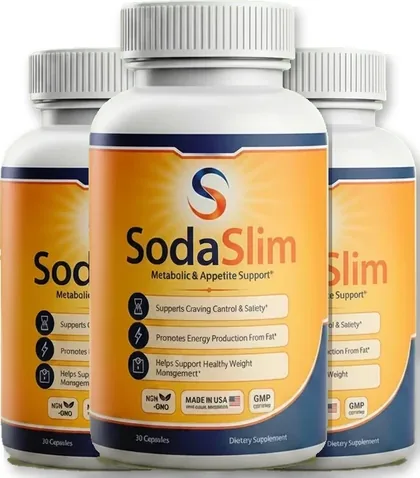
Where SodaSlim sits against this guide
Five named botanicals from four of the five families above, one capsule each morning, and no amount printed for any of them. 60 days from the date of purchase to decide.
Two bottles $158 · six bottles $294 · 60-day money-back guarantee
Choose A SodaSlim PackThirty capsules, thirty mornings · lot SOD-26/SA-1714 · ships from the U.S.